Reduce restaurant no-shows without punishing guests
Confirmations, reminders, a waitlist for refilling freed seats — and a card cover where the guest saves a card when they book, aimed at large parties and guests who have no-showed before. All from one reservation system, as settings instead of admin.
- Reminders and one-tap cancellation
- Card cover — nothing charged up front
- Staff refill the freed seat
No-shows drop with confirmations, reminders, one-tap cancellation, a waitlist, a guest profile that flags who didn't show — and a card cover aimed at the risky reservations. That's how to reduce restaurant no-shows without chasing guests: all six moves sit in the same reservation system, and you switch them on as settings. Measure your own no-show rate first, so you know which move bites.
- Reminders
- One-tap cancellation
- Waitlist
- Guest profile
- Measure no-shows
- Card cover on risky reservations
Turn a forgotten table into a confirmation or a freed seat
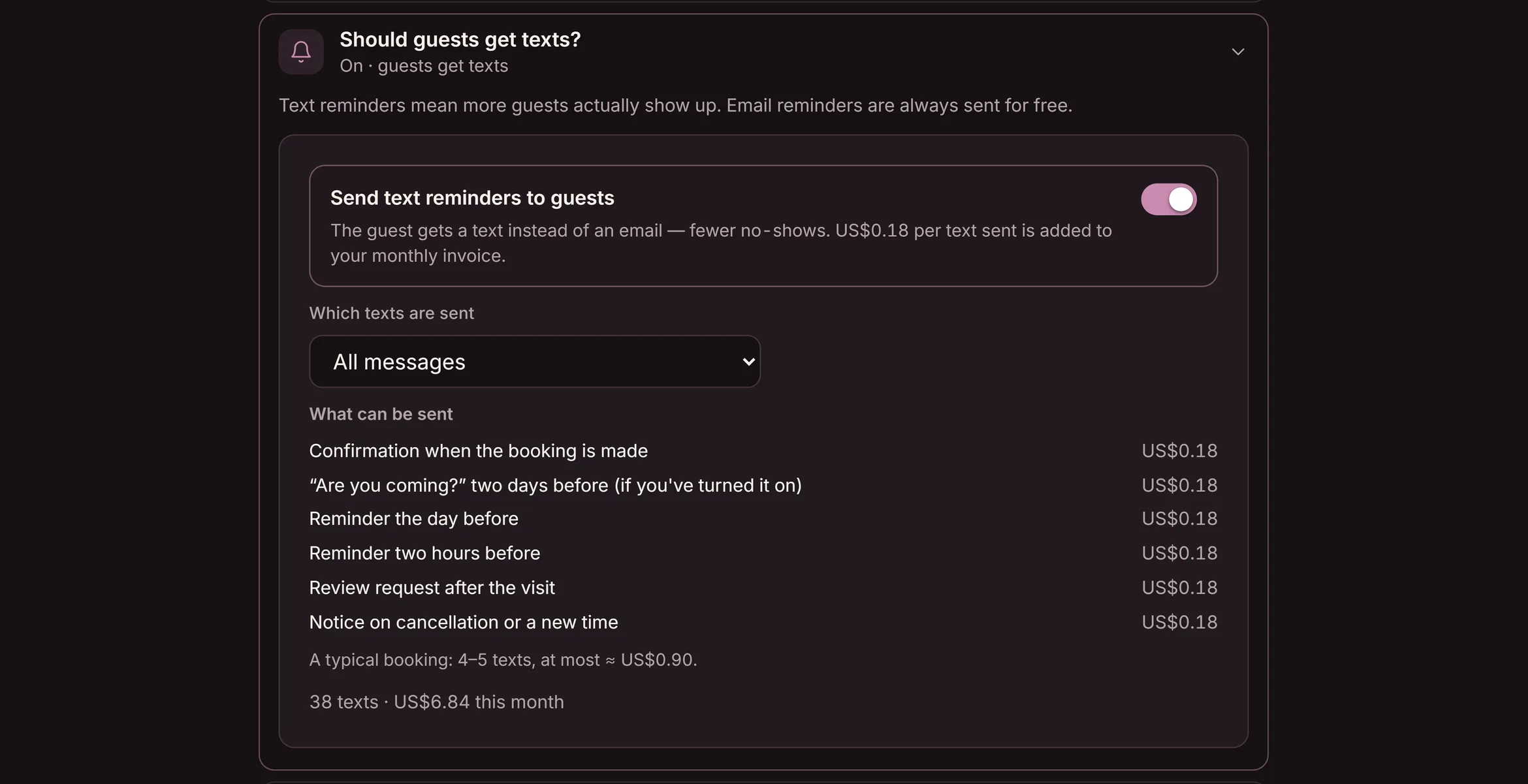
Guests mostly no-show out of forgetfulness, not malice. A confirmation the moment they book and a reminder 24 hours and 2 hours before the table keeps the reservation current. Reminders go out by email, free.
- Confirmation the moment the guest books
- Reminder by email
- A link to change or cancel in the reminder
Make canceling easy so fewer guests no-show
A guest who can release the table in two taps does it in time, so the next party takes the seat. A guest who has to call during the rush doesn't bother — and no-shows instead.
- A cancellation link in every confirmation
- Change the party size, the time, or cancel
- Offer the freed seat to the waitlist
Which reservations should ask for a card?
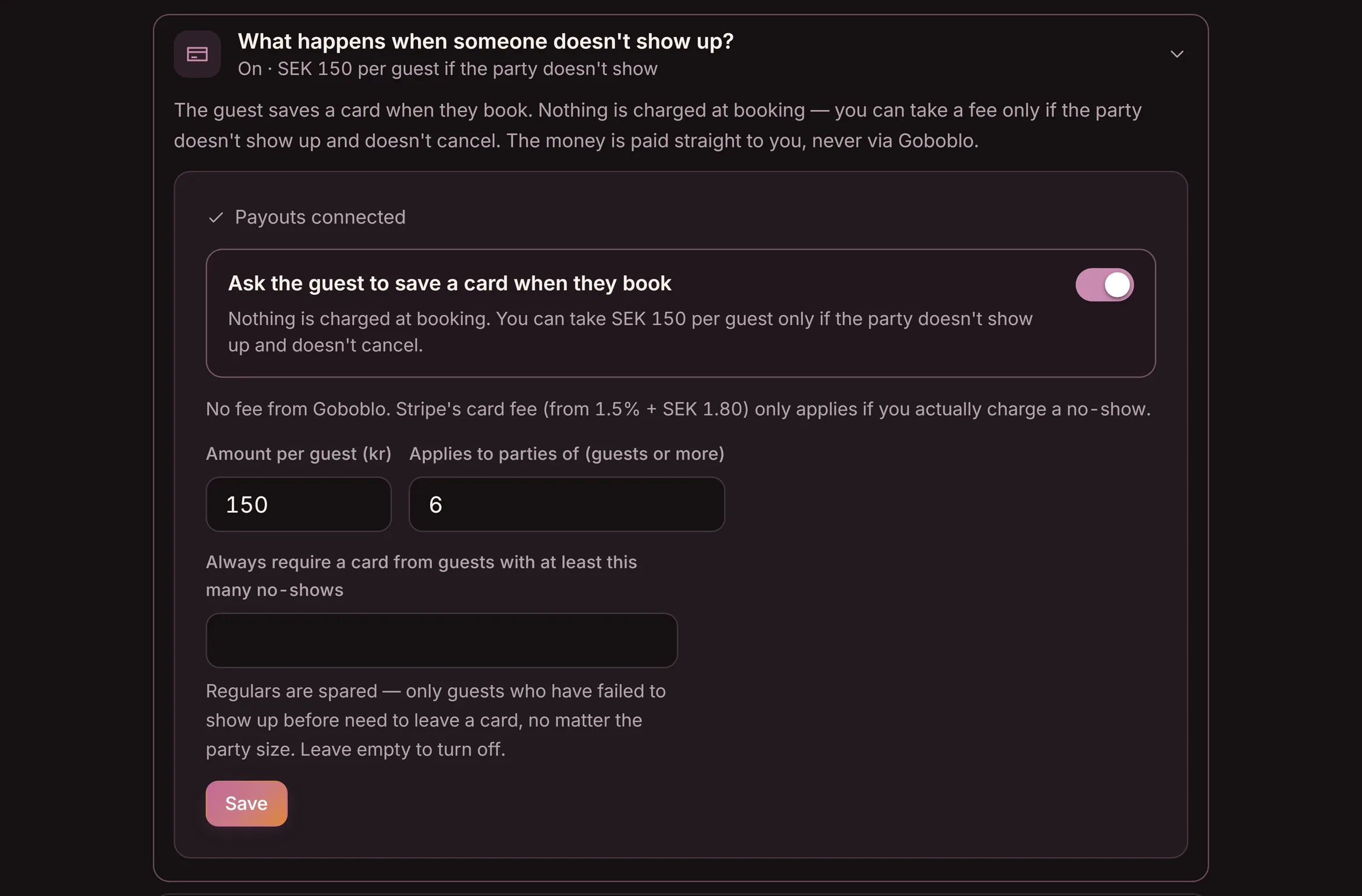
A card cover belongs only where it stings the most: large parties and guests who have no-showed before. In Goboblo the guest saves a card when booking — nothing is charged when the reservation is made, and you can take a per-guest fee only if the party no-shows without canceling. You choose the amount and the party size it applies from, and can always require a card from guests with prior no-shows — regulars are spared. Weekday reservations stay simple.
- Nothing charged up front — a fee only on a no-show
- Aim at large parties and repeat no-showers; regulars are spared
- The money is paid straight to you — no fee from Goboblo
Refill late gaps and flag the guest who no-shows again and again
A live waitlist keeps the next party ready, so when a seat is freed your staff offer it in one click instead of letting the chair sit empty. And the guest profile logs who didn't show — so the card requirement can land on exactly the guests who have no-showed before, automatically.
- A waitlist your staff fill the gap from
- A flag on repeat no-shows
- The same profile drives repeat visits
What is your own no-show rate?
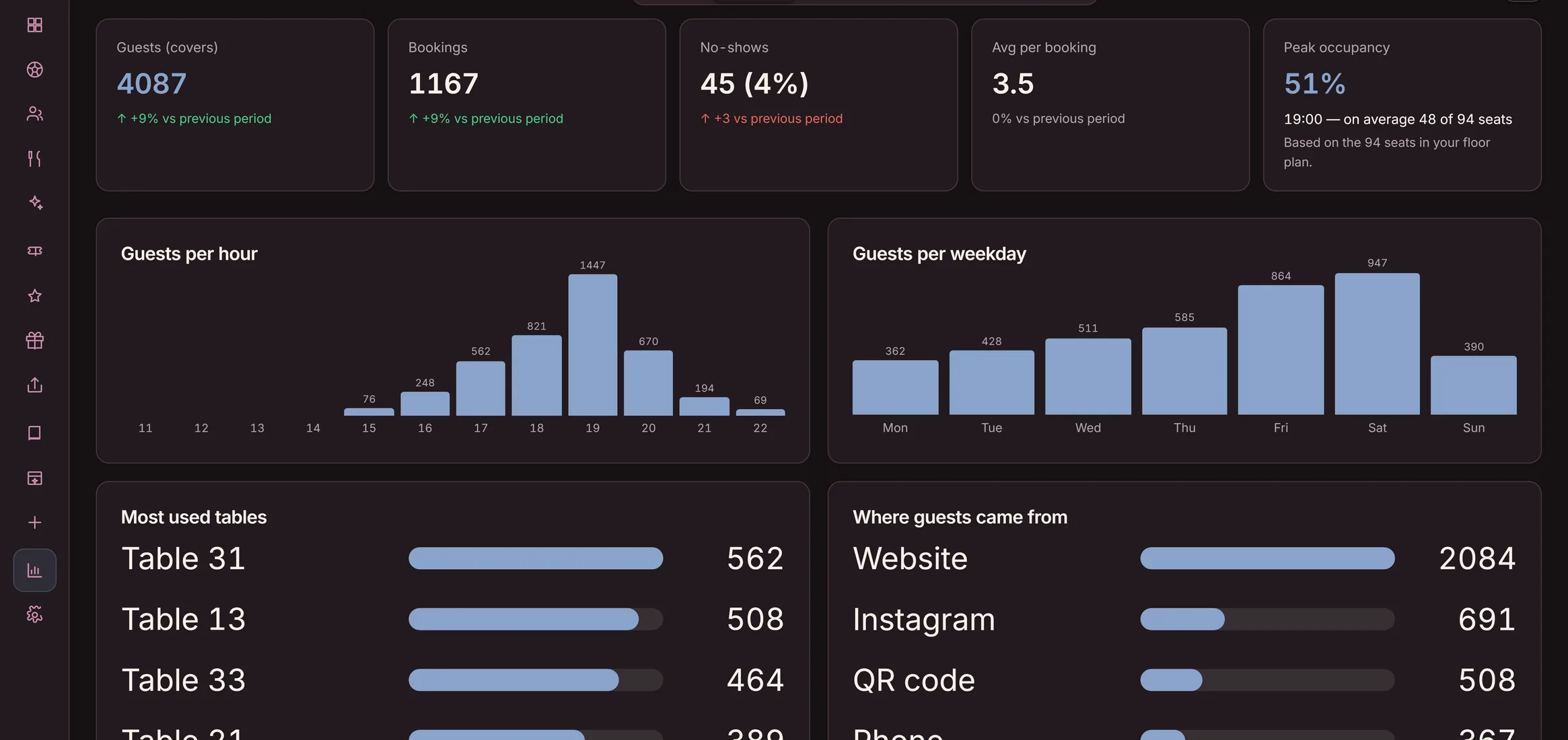
Before you pick a move: measure. The Analytics view shows your no-shows for a chosen period — in the demo location, 45 no-shows on 1,167 reservations, 4 percent. Only when you see the number per period do you know whether it's the reminders, the waitlist or the card cover that should do the work.
- No-show rate for a chosen period, right in Analytics
- Compare periods and see whether the moves bite
- The same view as occupancy, reservations and covers
The difference for the restaurant
An empty seat does not cost you the fee you skipped charging. It costs the full margin on a table you turned other guests and a walk-in away to hold. Here are the two services.
- One reminder, a week out, with no easy cancel
- Deposits on every reservation, suppressing volume
- Late gaps become empty seats all night
- The no-show rate is guessed, never measured
- Confirmation plus a one-tap reminder
- A card cover aimed at large parties and repeat no-showers
- A waitlist your staff fill the gap from in minutes
- The no-show rate shows for a chosen period in Analytics
What a no-show actually costs
The moves you run from one place
Cutting no-shows is configuration, not a project. Goboblo's restaurant reservation software runs automatic reminders, one-tap cancellation, a live waitlist your staff refill freed seats from, a guest profile that flags repeat no-shows — and a card cover you aim at large parties and guests who have no-showed before. The no-show rate shows for a chosen period in Analytics.
The same guest profile that flags a risk also drives repeat visits, so a flagged guest can become a regular instead of just a block. If you want to build real regulars, loyalty and repeat visits are the next step, and a live table management view makes a freed seat bookable the same second. The base for all of it is a clear cancellation policy that tells the guest how and when they can cancel. Whether the requirement should be a saved card or money up front is settled in restaurant reservation deposits: card guarantee, prepaid seats, or neither. You pay a flat monthly fee for that, not a commission on your own reservations. Cutting no-shows is one way to increase restaurant reservations. The numbers above are worked examples — measure your own slots before you set the rules.
What operators usually ask about no-shows
What counts as a normal no-show rate?
No-show rates commonly run 10–20% of reservations and climb on weekend peaks and large parties. Measure your own rate first, or you cannot tell whether a card cover, a reminder or a waitlist is actually working. If you need more than this, more guides for owners cover reservations, table turns and loyalty.
Do deposits reduce no-shows?
Yes — when they're aimed right. A deposit on every reservation scares off everyday guests and suppresses volume. In Goboblo the no-show cover is therefore a card guarantee: the guest saves a card when booking, nothing is charged when the reservation is made, and you can take a per-guest fee only if the party no-shows without canceling. You aim the requirement at large parties — from a party size you choose — and can always require a card from guests who have no-showed before, while regulars are spared. Also separate what a no-show is from a cancellation — they need different responses.
When should the reminder go out?
Send a confirmation the moment the guest books, then a reminder 24 hours and 2 hours before the table. The reminder needs a one-tap link to change or cancel, so a forgotten reservation becomes either an honored table or a freed seat.
Do these moves reduce guests' willingness to book?
No. Easy cancellation and a card cover that only touches the risky reservations do not suppress demand — they move the friction to the right place. The guest releases the table in two taps, and you fill the seat from the waitlist instead of staring at an empty table.
Do we keep the fee when a guest no-shows?
Yes. If you charge a no-show, the money is paid straight to you through your own card connection — never through Goboblo, and Goboblo takes no fee on it. Stripe's card fee applies only if you actually charge. That follows from the model: a flat monthly fee, 0 commission on your own reservations, and the table is always yours.
What do empty tables cost you every month?
Drag the sliders with your own numbers. Reminders, the waitlist and the no-show cover in Goboblo exist to fill exactly these tables again.
Free up to 25 reservations/mo · No card
Calculated straight from your own values: reservations per week × the share that no-shows × average check × 4.33 weeks per month. No industry assumptions, no estimated recovery.
Want to reduce no-shows at your restaurant?
Book a short demo and we'll show reminders, one-tap cancellation, the waitlist, guest profiles and the card cover in one concrete restaurant flow.